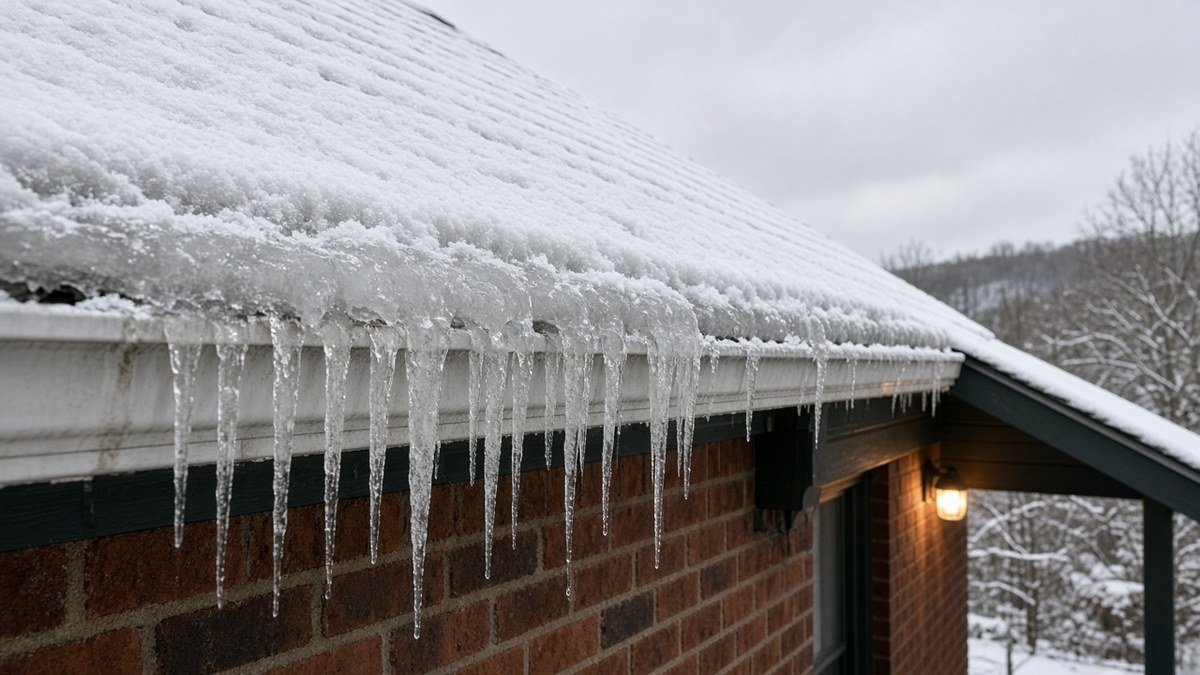
If you live in Western Pennsylvania, you have seen it: a thick ridge of ice along the roof edge, a row of icicles hanging off a sagging gutter, and sometimes a brown water stain on a bedroom ceiling a few days later. That ridge is an ice dam, and it is one of the most common reasons gutters get pulled loose and roofs leak in a PA winter. This guide explains why ice dams form, what a gutter repair actually involves, and how to budget before you call anyone.
What an ice dam is and why it forms
An ice dam needs three things: snow on the roof, heat leaking into the attic, and freezing weather outside. Warm air from the house leaks into the attic and warms the underside of the roof deck. The snow on top melts, the water runs down to the cold roof edge over the overhang, and it refreezes there. Each melt-and-freeze cycle builds the ridge higher until water pools behind it and backs up under the shingles. The U.S. Department of Energy’s Building America Solution Center notes that ice dams can form with as little as 2 inches of snow on a roof.
Western PA’s weather makes this worse. Our winters swing above and below freezing over and over, so snow melts in the afternoon and refreezes overnight. Older homes in towns like Connellsville, Uniontown and Greensburg often have little attic insulation, open bypasses around chimneys and light fixtures, and gutters that were hung decades ago.
How ice dams damage gutters
- Weight. Ice packed into a gutter is heavy. It bends hangers, pulls spikes out of the fascia and makes sections sag or tip forward.
- Split seams and corners. Water that freezes inside seams and inside corners expands and opens them up, which is why corners are often the first thing to leak in spring.
- Fascia and soffit rot. Water that backs up behind the ice can soak the fascia board the gutter is fastened to. Once that wood softens, new hangers have nothing solid to grab.
- Downspout blockages. A frozen downspout sends meltwater over the top of the gutter and down beside your foundation, which can show up later as a wet basement.
What a gutter repair usually involves
A typical gutter repair (as opposed to replacing the whole system) is some mix of these jobs:
- Re-hanging sagging sections and adding hidden hangers at closer spacing
- Resealing or replacing leaky end caps, seams and corners
- Re-pitching runs so water flows toward the downspouts instead of sitting
- Clearing and reattaching downspouts, and adding extensions so water lands well away from the foundation
- Replacing a short damaged section of gutter
- Replacing soft fascia boards behind the gutter, when the rot is limited
If the fascia is rotted along most of the house, or the gutters are rusted through in several places, a contractor may recommend new gutters instead. That is a different, larger job, so ask them to show you the damage before you agree.
How to budget for a gutter repair
Costs depend on how many feet need work, how many corners leak, how many hangers are needed, the height of the house and whether any wood is rotted. Our free PA Home Repair Estimator uses a starting range of about $200 to $800 for a gutter repair project, with a typical job around $500. That range is a planning estimate, not a quote. For another view of national pricing, see Angi’s gutter repair cost guide. Your estimate changes once you enter the feet of gutter to repair, the number of leaky corners and the hangers you need, so plug in your own numbers for a closer figure.
Our estimator also plans on gutter work usually taking 1 to 3 weeks to get on a contractor’s schedule and half a day to a day on site. After the first big storm of the season, schedules fill up, so it pays to call in the fall.
Things that push a repair to the high end of the range:
- Two-story or steep roof lines that need extra ladders or staging
- Rotted fascia that has to be replaced before gutters can be rehung
- Many leaky corners and long sections that need re-pitching
- Emergency or mid-winter service when ice has to be dealt with first
Fix the cause, not just the gutter
New hangers will not stop ice dams from coming back. According to University of Minnesota Extension, the long-term fix is to seal the air leaks between the house and the attic first, and then add insulation to cut heat loss. In practice that means:
- Air sealing around attic hatches, plumbing vents, wiring holes, recessed lights and chimney chases
- Adding attic insulation to at least current code levels
- Keeping soffit vents open with baffles, so cold outside air keeps the roof deck cold
- Ice and water shield under the shingles along the eaves the next time the roof is replaced
Heat cable along the roof edge can help in a trouble spot, but it treats the symptom, not the heat leak. If you are planning a roof job anyway, our PA roofing cost guide covers what to budget.
What to do if you already have an ice dam
- Stay off the roof. Ice and snow on a pitched roof is a fall waiting to happen.
- From the ground, use a long-handled roof rake to pull snow off the lower few feet of the roof. Don’t scrape down to the shingles.
- Don’t chip at the ice with a hammer, shovel or ice pick. That is how shingles and gutters get torn up.
- If water is coming inside, catch it, move belongings and take photos for your records and your insurer.
- Call a roofer or gutter contractor who offers ice dam removal with steam. Steam melts the ice without damaging shingles.
A quick fall checklist
- Clean gutters and downspouts after the leaves are down
- Look for sagging runs, gaps between gutter and fascia, and drips at corners during a rain
- Make sure downspouts discharge well away from the foundation
- Peek into the attic for daylight around the eaves, wet insulation or frost on nails
- Get repairs scheduled before the first hard freeze
For the rest of the house, see our Western PA fall and winter maintenance checklist. Not sure whether this is a DIY job? Read DIY vs. pro: when to call a handyman in Pennsylvania, and check what to look for before you hire.
Get a free estimate before you call
Knowing a fair range makes it easier to talk to contractors and spot a quote that is way off. Open the PA Home Repair Estimator, choose Gutter Repair, and enter the feet of gutter, leaky corners and hangers you need. It’s free and takes about a minute.
Planning a reroof at the same time? Our free ice and water shield calculator estimates how many rolls the eaves need, and the attic insulation top-up calculator turns inches of added insulation into a bag count.
After your free estimate you can add an optional printable: the $7 Project Planning Guide, the $12 Job Kit for comparing up to three bids, or the $25 Project Pack with both plus Bid Check. They are on the estimator page once your range appears.
Cost figures are estimates for planning only, not quotes. Actual prices depend on your home, your contractor and current material costs.