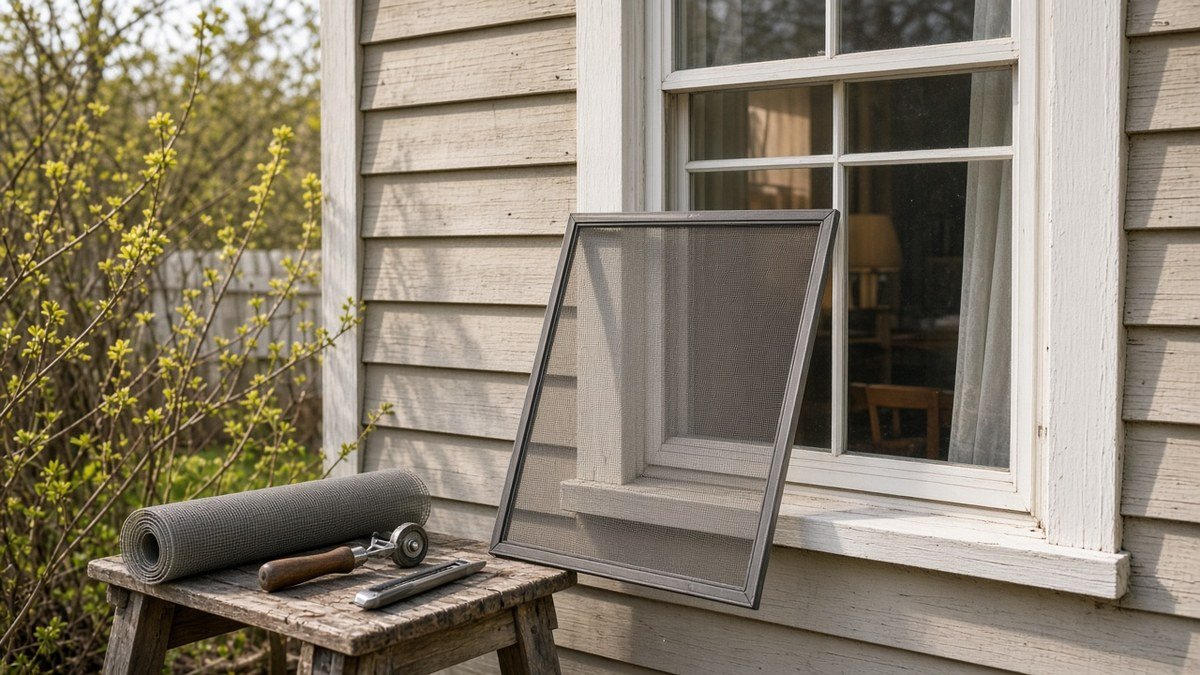
A torn window screen is easy to ignore when the windows stay closed through a Pennsylvania winter. By the first comfortable spring afternoon, that small tear becomes a reason to keep the window shut. Checking removable screens now gives you time to identify missing parts and decide whether each opening needs a patch, new mesh or a replacement screen frame.
This is a screen-maintenance guide, not a window-replacement recommendation. An insect screen does not repair a leaking window, restore a damaged sash or provide fall protection. Keep those issues separate so a modest screen job does not become an unclear whole-window project.
Start with a room-by-room screen list
Walk through the house from inside and list the windows you actually open. Include kitchen, bedroom and enclosed-porch windows rather than assuming every screen needs identical work. Photograph each screen in place before removing anything. The photo can show which way a pull tab faces, how the clips engage and where a damaged corner belongs.
Give each removable screen a simple label: “upstairs front left,” for example. Use a removable label on the frame rather than on the mesh. Screens that appear interchangeable may fit differently, especially in an older home. Keep each screen’s clips and other small parts together in a labeled container.
Work only where you can safely reach from inside or from the ground. Do not lean out of an upper-story window or improvise access with furniture. If a screen cannot be removed without unsafe access, leave it in place and ask a suitable professional about removal.
Decide what is actually damaged
Look at the mesh, frame and attachment hardware separately. A small isolated hole in otherwise sound mesh is different from a screen with several tears or material pulling away around the edges. A patch may be a temporary, visible fix; replacing the mesh is a different scope of work.
Next, check the frame without forcing it. Look for bent rails, separated corners and missing tabs or clips. A frame that no longer seats properly may need repair or replacement even if its mesh looks fine. Do not solve a poor fit by wedging the frame into the window or driving unfamiliar fasteners into the surrounding assembly.
Finally, inspect how the mesh is held. Many screens use a flexible retaining cord called spline, seated in a groove. Others use different construction. Identify the assembly before buying supplies. If the screen is proprietary or the retention method is unclear, take photographs and ask a screen shop or the window manufacturer what is serviceable.
Measure before you order
For a removable screen, record the outside frame width and height and the frame thickness. Photograph the corners, clips, springs and pull tabs. Record any manufacturer marking. If you have a matching intact screen, keep it available as a reference, but do not assume its dimensions apply to another opening.
If you are replacing mesh in an existing frame, follow the repair kit and frame manufacturer’s instructions for mesh allowance, spline size and installation. Do not choose spline simply because it looks similar on a store shelf. A poor match can make installation difficult or leave the mesh inadequately retained.
For a missing screen, ask the supplier exactly which measurements it wants. Opening dimensions and finished screen dimensions are not necessarily interchangeable. A shop may prefer to measure the window itself or use an intact matching screen as a pattern. Confirm that before ordering a custom item.
Keep a small repair small
A straightforward re-screening job starts with a frame that is sound, removable and suitable for the repair method. Use a stable work surface, protect nearby finishes and follow the product instructions. Sharp tools used to trim mesh should stay away from children and from the window’s finished surfaces.
Avoid pulling mesh so tightly that the frame distorts. The goal is an evenly retained screen that fits its opening, not the tightest possible mesh. If the frame bows or the spline will not seat as directed, stop and check the material compatibility and technique instead of applying more force.
Leave deteriorated painted window surfaces alone during a screen-only project. Scraping, sanding, drilling or repairing the window frame changes the job. Likewise, cracked glass, loose sashes and signs of water entry need their own assessment. Replacing the screen will not correct those conditions.
Choose mesh for the opening, not a promised result
Check the window manufacturer’s requirements and the mesh supplier’s description before choosing material. Compare the intended use, appearance, visibility and compatibility with the existing frame. If you want a specialty mesh, ask whether the frame and attachment system can accommodate it.
Do not treat marketing labels as guarantees. A screen described for pets is not a substitute for supervising an animal near an open window. No ordinary insect screen should be relied on to keep a child from falling. Keep furniture that invites climbing away from open windows and use appropriate window-safety measures separately.
The CDC recommends installing or repairing and using window and door screens as one way to keep mosquitoes outdoors.[1] That is a practical reason to repair holes, not a promise that new mesh will eliminate insects or replace other mosquito-control steps.
Give a repair shop a clear scope
Send the shop your labeled photos, measurements and a count of the screens involved. State whether you can deliver removable frames or need on-site work. Ask whether the proposal includes mesh, spline, corner pieces, tabs, clips, frame repair and reinstallation, as applicable.
Keep screen replacement separate from window repair in the written description. Ask what happens if a frame turns out to be bent or a needed part is unavailable. There is no useful universal price for every screen: dimensions, construction, material and access all affect the scope. Get pricing for the actual items rather than treating a whole-window estimate as a screen quote.
Reinstall and check before the first warm day
Reinstall each screen in its original opening according to the manufacturer’s instructions. Check that the clips engage and the frame sits as intended. Operate the window normally without forcing it. Look for gaps, loose edges or hardware that prevents the sash from closing properly.
Keep the labeled photos and a short list of any screens still needing work. Store unused screens flat or supported so they are not bent, following the manufacturer’s guidance. A little organization now makes the spring changeover simpler—and keeps a repairable insect screen from being confused with a much larger window project.
If a screen job turns into a larger window repair, or you just want a planning range for related work the estimator covers, start with the free PA Home Repair Estimator (planning ranges, not bids). For questions to ask before you hire, see Before You Hire. We do not match homeowners with contractors.
Source
[1] CDC, Mosquito Control at Home, opened November 8, 2026. Supports the recommendation to install or repair and use window/door screens; other sections are general scope-planning guidance, not disease-prevention guarantees.