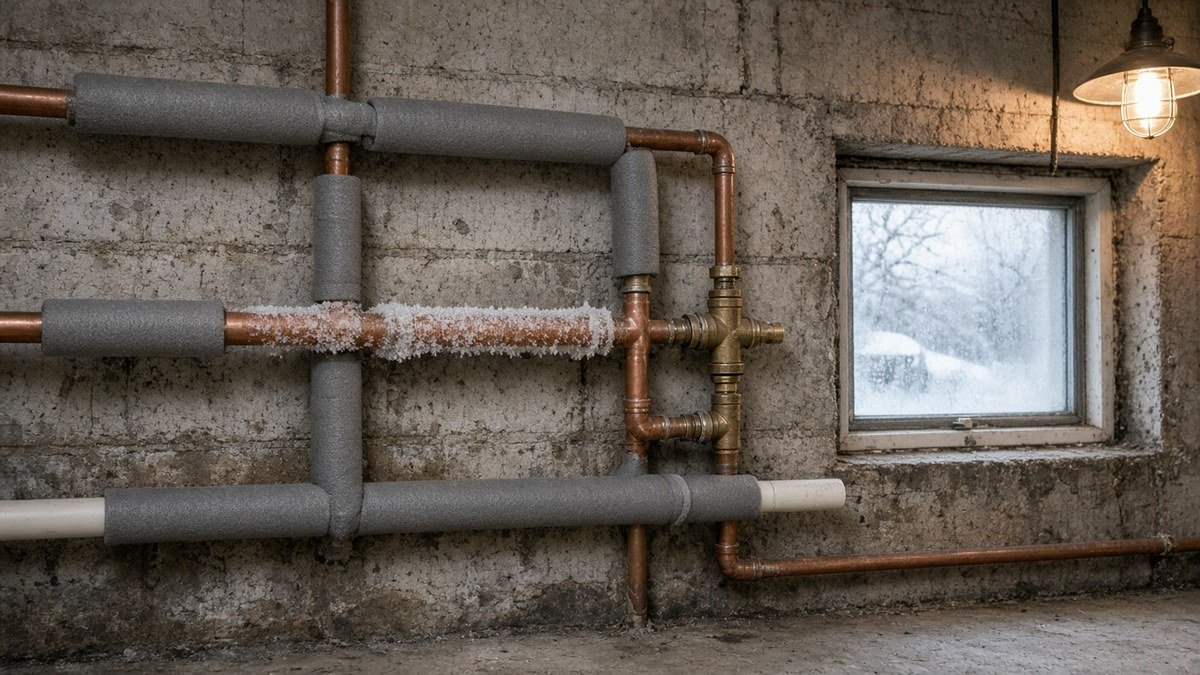
A Pennsylvania cold snap can turn a quiet basement into a flooded one overnight. Water expands as it freezes, and a pipe that freezes solid can split or push a fitting apart. The damage often shows up only when the pipe thaws and water starts flowing again.
The good news is that most frozen pipes are preventable with a few habits and some inexpensive materials. This guide covers where pipes are most at risk, a pre-winter checklist, what to do during a deep freeze, how to thaw a pipe safely, and what to do if one bursts.
Where pipes freeze in PA homes
Pipes freeze where cold air reaches them. In older Pennsylvania houses, the usual suspects are:
- Supply lines in exterior walls, especially under kitchen and bathroom sinks
- Pipes in crawl spaces, unheated basements, garages and attics
- Outdoor hose bibs and the short run of pipe just inside the wall
- Pipes near rim joists, sill plates and basement windows where cold air leaks in
- Lines in additions or bump-outs built over an open or poorly insulated floor
If you have had a pipe freeze before, it is likely to happen again in the same spot unless something changes.
Before winter: a prevention checklist
Do these in the fall, before the first hard freeze:
- Disconnect garden hoses. Shut off and drain outdoor faucets if they have an interior shutoff valve
- Insulate exposed pipes in crawl spaces, garages and unheated basements with foam pipe sleeves
- Seal gaps where cold air enters near pipes: rim joists, sill plates, and holes where lines pass through exterior walls. Caulk and spray foam are inexpensive fixes
- Close or cover crawl space vents if your home’s setup allows it, and make sure basement windows close tightly
- Find your main water shutoff valve, label it, and make sure everyone in the house knows where it is and that it turns
- If you are traveling, arrange for someone to check the house daily during cold weather
Our Western PA fall and winter maintenance checklist covers these along with gutters, furnace care and other cold-weather prep. If you are adding insulation this year, our attic insulation guide explains air sealing, which also cuts the cold drafts that can reach pipes in exterior walls. Ice dams can also loosen gutters and let meltwater into the eaves; see our guide to ice dams and gutter repair in Western PA if that is the problem you are seeing.
During a deep freeze
The American Red Cross guidance on frozen pipes lays out the basics, and they work:
- Keep the thermostat set to the same temperature day and night rather than turning it down overnight
- If you are going away, leave the heat on and set no lower than 55°F
- Let cold water drip from faucets served by exposed pipes. Moving water is less likely to freeze
- Open kitchen and bathroom cabinet doors so warmer room air can reach the plumbing
- Keep garage doors closed if there are water lines in the garage
A few extra dollars on the heating bill during a cold spell is far cheaper than a burst pipe.
How to tell if a pipe is frozen
The most common sign is a faucet that only trickles or produces nothing when you turn it on during very cold weather. You may also see frost on an exposed pipe, or a section of pipe that bulges. If one faucet is dry but others work, the freeze is likely somewhere on the line serving that fixture, often where it runs along an exterior wall.
How to thaw a frozen pipe safely
Following the Red Cross guidance:
- Keep the faucet open. As the ice melts, flowing water helps melt the rest
- Apply gentle heat to the frozen section with a hair dryer, an electric heating pad wrapped around the pipe, or towels soaked in hot water
- Work from the faucet end back toward the frozen area
- Keep heating until full water pressure returns, then check other faucets for additional frozen spots
Never use a blowtorch, propane torch, kerosene heater, charcoal stove or any other open flame to thaw a pipe. Open flame is a serious fire hazard in walls and basements. Keep electrical devices away from standing water.
If you cannot find the frozen area, cannot reach it, or the pipe does not thaw, call a licensed plumber.
If a pipe bursts
Speed matters. Do these in order:
- Shut off the main water valve right away
- If water is near outlets, appliances or the electrical panel, stay out of the water and shut off power to that area only if you can reach the panel safely. Otherwise, call your utility or an electrician
- Open a faucet at the lowest point in the house to drain the remaining water out of the lines
- Take photos and video of the damage before you clean up, for your insurance claim
- Move belongings out of the wet area and start drying it out with fans and a dehumidifier
- Call a plumber to repair the pipe, and call your insurance company to ask how they want the claim handled
Drywall, insulation and flooring that stay wet for more than a day or two can grow mold, so do not leave a soaked area to “dry on its own.”
What repairs can cost (planning estimates)
These are planning ranges from the PA Home Repair Estimator, not quotes:
- Plumbing repair: about $180 to $500, typical around $340, for a straightforward repair
- Water damage restoration: about $1,400 to $6,350, typical around $3,850, for a moderate cleanup and dry-out
- Drywall repair: about $300 to $930, typical around $610, for patching after the area is dry
The gap between a plumbing repair and a full water-damage cleanup is the strongest argument for prevention. An afternoon with pipe insulation and a tube of caulk costs far less than either.
DIY or call a pro?
Insulating exposed pipes, sealing drafts and thawing an accessible pipe with a hair dryer are reasonable homeowner jobs. Cutting out and replacing a split pipe, working on a line inside a finished wall, or anything involving gas lines or the electrical panel is plumber or electrician territory. Our guide to DIY vs. pro: when to call a handyman helps you draw that line.
Next step: know your numbers before you need them
Use the free PA Home Repair Estimator to get a planning range for plumbing repair or water damage cleanup for your home. If you want something to print or hand to contractors, you can add the $7 Project Planning Guide (your estimate with itemized lines and questions to ask), the $12 Job Kit (a scope checklist and a worksheet to compare up to three bids), or the $25 Project Pack, which bundles both with a Bid Check worksheet.
Cost figures are estimates for planning only, not quotes. Actual prices depend on your home, your contractor and current material costs.