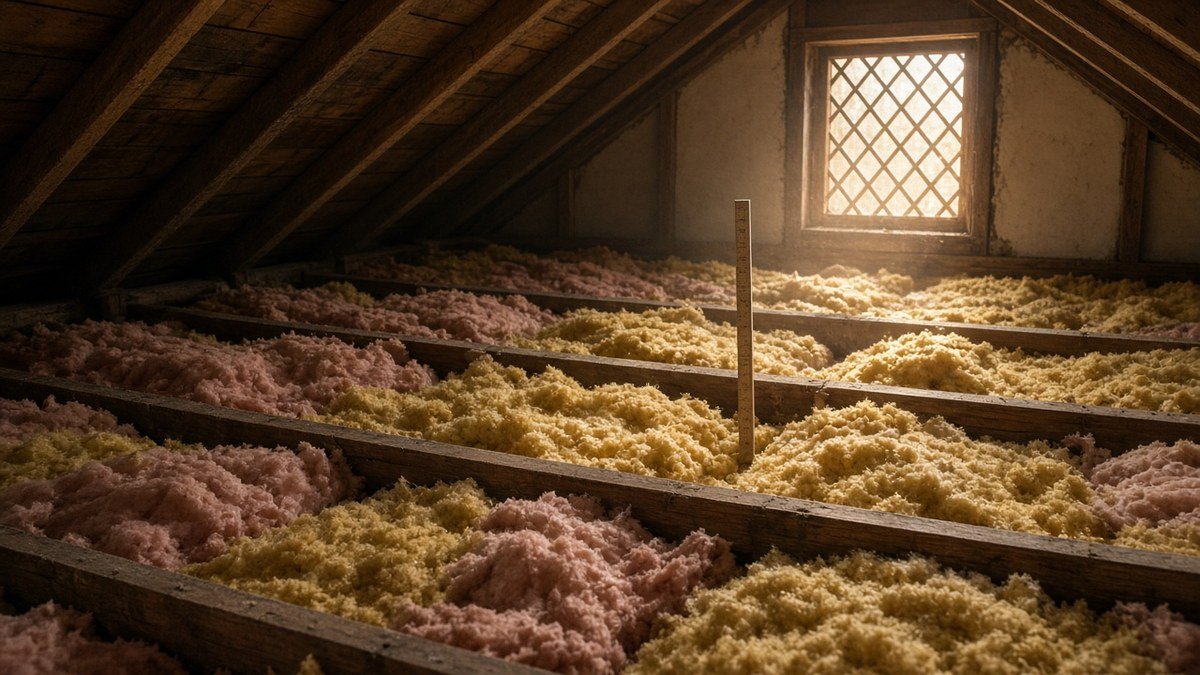
If your upstairs rooms are chilly, your heating bills climb every January, or you get icicles along the eaves, the attic is one of the first places to look. Many older Pennsylvania homes have only a few inches of settled insulation up there, and topping it up is one of the more practical winter projects a homeowner can plan.
This guide covers how much insulation a PA attic should have, the step most people skip, how to estimate materials, and planning-level costs for hiring the job out.
How much insulation does a PA attic need?
Insulation is rated by R-value: the higher the number, the more it resists heat flow. Pennsylvania falls in climate zones 4, 5 and 6 depending on the county, and the ENERGY STAR recommended insulation levels for all three zones are similar for attics:
- Uninsulated attic: add insulation to reach about R-60
- Attic with 3 to 4 inches already: add enough to reach about R-49
A quick way to check what you have: measure the depth of the existing insulation in a few spots with a ruler and multiply by roughly 3 (a common rule of thumb for fiberglass and cellulose). Five inches of old fiberglass is around R-15, well short of the target. If you can see the tops of the ceiling joists, you almost certainly need more.
Seal air leaks before you add insulation
This is the step that makes the biggest difference and the one most often skipped. Warm, moist air escapes into the attic through gaps around plumbing stacks, light fixtures, wiring holes, chimney chases, top plates of interior walls and the attic hatch. That leakage wastes heat, and it is a major contributor to the ice dams we covered in our guide to ice dams and gutter repair in Western PA.
ENERGY STAR’s guidance is to seal those leaks first, then insulate. Once new insulation is blown in, the gaps are buried and much harder to reach. A good insulation contractor will include air sealing in the scope; if a quote does not mention it, ask.
Other things to handle before insulating:
- Keep insulation clear of chimneys and flues, and use the required clearance or a metal dam
- Check that recessed lights are rated for insulation contact, or have them boxed or replaced
- Install or keep baffles at the eaves so soffit vents are not blocked
- Insulate and weatherstrip the attic hatch or pull-down stairs
- Fix any roof leaks or damp spots first. Insulation over a wet area will hide the problem
Don’t forget ventilation
A well-insulated attic should stay close to outdoor temperature in winter. That depends on balanced ventilation, usually soffit vents low and ridge or roof vents high. Blocking soffits with new insulation is a common mistake that can lead to moisture and frost on the underside of the roof deck. Our Attic Ventilation – Net Free Area calculator gives a rough idea of how much vent area an attic of your size calls for.
Estimate your materials
If you are pricing a DIY top-up or just want to understand a contractor’s quote, two of our free calculators help:
- The Attic Insulation Top-Up calculator estimates how many inches you need to add to reach a target R-value
- The Insulation – Blown (Bags) by R calculator estimates the number of bags of blown insulation for your attic area and target
Blown insulation is usually the practical choice for topping up an existing attic floor because it fills around joists, wiring and irregular spaces. Batts can work in an open, easy-to-reach attic with regular joist spacing. Whichever you choose, wear a respirator, eye protection and long sleeves, and stay on the joists.
What it costs to hire out (planning estimates)
These are planning ranges from the PA Home Repair Estimator for a typical Pennsylvania attic with blown fiberglass to about R-38. They are not quotes.
- Standard level: about $1,000 to $4,000, typical around $2,500
- Low level: about $800 to $3,200
- High level: about $1,200 to $4,800
- Going to R-49 instead of R-38: about $1,100 to $4,400, typical around $2,750
What moves the price: attic size, how easy the attic is to get into and move around in, whether old insulation must be removed (for example, after rodent damage or water), how much air sealing is needed, and whether baffles and a hatch cover are included. Removal and heavy air sealing can add significantly to a basic blow-in price.
Is it worth it?
For most homes with thin attic insulation, adding more is one of the cheaper ways to improve comfort and cut heat loss, and it helps your furnace work less hard. If you are also weighing a new heating system, it often makes sense to air seal and insulate first, then size the new equipment. See our guide to furnace repair vs. replacement for that side of the decision.
Before you sign, check whether your gas or electric utility currently offers an energy audit or insulation rebate. Program details change, so confirm directly with your utility rather than relying on a contractor’s description.
Questions to ask an insulation contractor
- What R-value will the finished attic be, and how many inches is that for the material you are using?
- Is air sealing included? Which areas will you seal?
- Will you install baffles at the eaves and insulate the hatch?
- How will you handle the chimney, flue and any recessed lights?
- Will you leave depth markers or a certificate showing the installed R-value?
For the rest of your winter prep, see our Western PA fall and winter maintenance checklist.
Next step: run your numbers
Use the free PA Home Repair Estimator to get a planning range for an insulation addition, then compare it with the quotes you receive. If you want something to print or hand to contractors, you can add the $7 Project Planning Guide (your estimate with itemized lines and questions to ask), the $12 Job Kit (a scope checklist and a worksheet to compare up to three bids), or the $25 Project Pack, which bundles both with a Bid Check worksheet.
Cost figures are estimates for planning only, not quotes. Actual prices depend on your home, your contractor and current material costs.