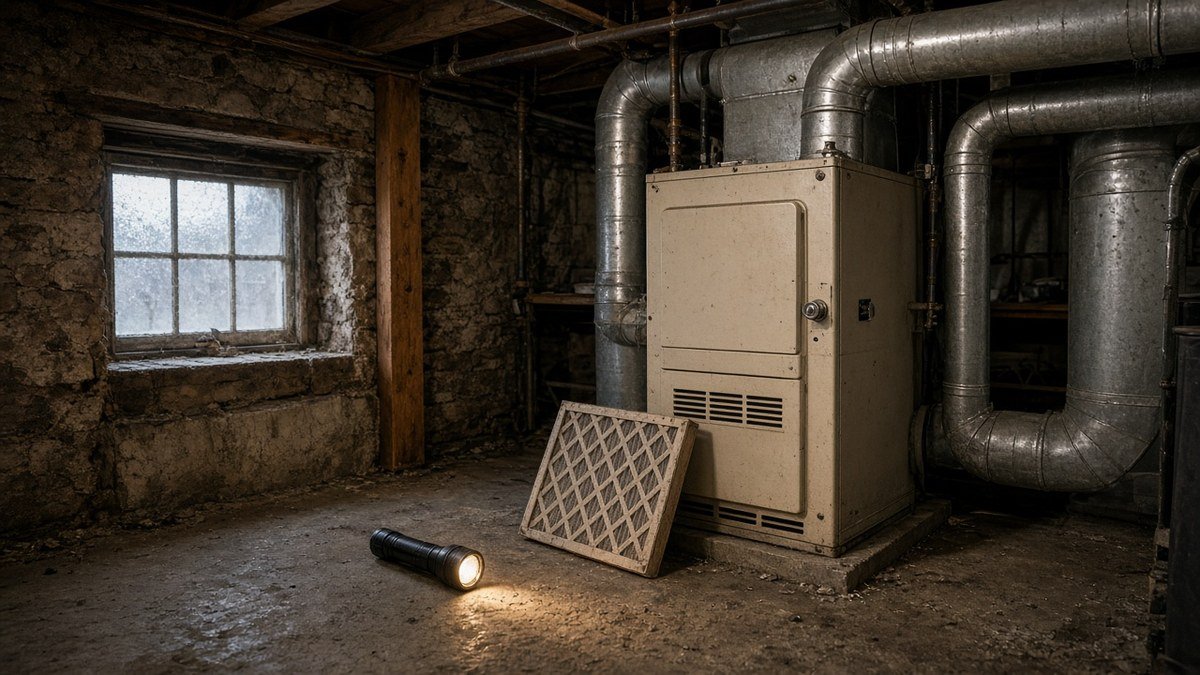
When a furnace starts short-cycling, blowing lukewarm air or making new noises in November, most Pennsylvania homeowners face the same question: pay for the repair, or start pricing a new system? There is no single rule that fits every house, but there is a sensible way to think it through before a technician is standing in your basement waiting for an answer.
This guide walks through the questions that matter most, what planning-level costs look like, and how to compare quotes so you are not making a several-thousand-dollar decision in a cold house at 10 p.m.
Start with safety, not cost
Some furnace problems are not a repair-or-replace question at all. They are a “turn it off and call a pro today” question. Shut the system down and get a qualified HVAC technician out if you notice:
- A smell of gas near the furnace or anywhere in the house (leave the house first and call your gas utility from outside)
- A carbon monoxide alarm going off
- Soot or scorch marks around the burner area or vent connections
- A flame that is yellow and lazy instead of mostly blue on a gas furnace
- Water pooling under a high-efficiency furnace, or a rusted-through vent pipe
If you do not have working carbon monoxide alarms on every level of the house, add them before heating season. They are inexpensive and they matter far more than any efficiency number.
The four questions that usually decide it
1. How old is the furnace?
Look for a data plate inside the furnace door or a date on the serial number sticker. A furnace that is still in its first decade usually deserves a repair unless the damage is severe. As a system gets into its late teens and twenties, the math starts to shift. Parts get harder to find, other components are wearing out at the same time, and each repair buys fewer reliable years.
2. What is actually broken?
Repairs fall into two broad groups. Smaller fixes, such as an igniter, flame sensor, thermostat, capacitor or a clogged condensate line, are routine. Bigger component failures, such as a blower motor, control board, inducer motor or gas valve, cost more but can still make sense on a younger system. A cracked heat exchanger is the big one: on an older furnace it usually points toward replacement, and you should get a second opinion before you agree to either path.
3. How efficient is the current system?
Furnace efficiency is measured as AFUE, the share of fuel energy that becomes heat in your home. According to the U.S. Department of Energy guide to home heating systems, older furnaces typically run around 56 to 70 percent AFUE, mid-efficiency units around 80 to 83 percent, and high-efficiency condensing furnaces about 90 to 98.5 percent. Federal rules have required at least 80 percent AFUE for most new non-weatherized gas furnaces since 2015. If your furnace is an older, lower-efficiency model, part of the cost of a replacement is offset over time by lower fuel use, especially in a long Western PA heating season.
4. Is the house comfortable when the furnace works?
If some rooms are always cold, the system cycles constantly, or the ductwork is leaky and uninsulated, a new furnace alone will not fix it. Sometimes the better spend is duct sealing and insulation first, then a correctly sized system. Our guide to Western PA fall and winter maintenance covers the simple checks to do before you call anyone.
What the numbers look like (planning estimates)
These are planning ranges from the PA Home Repair Estimator at the Standard level for Pennsylvania. They are not quotes, and your real price depends on your system, access and the contractor.
- HVAC repair, minor: about $250 to $700, typical around $350
- HVAC repair, major or component: about $500 to $5,000, typical around $2,000
- HVAC replacement (whole system): about $5,000 to $12,500, typical around $7,500
The wide spread on major repairs is the reason this decision is hard. A $600 blower motor on a 9-year-old furnace is an easy call. A $2,500 repair on a 22-year-old, 65 percent efficient furnace is a very different one.
A simple way to compare repair vs. replace
Many contractors use a rough rule of thumb: multiply the age of the furnace by the repair cost, and if the result is well above the price of a new system, replacement deserves a serious look. It is a conversation starter, not a law. Use it alongside these questions:
- Is this the first significant repair, or the third in a few years?
- Will the repair restore safe, normal operation, or just get you through the winter?
- Are you planning to stay in the house long enough to benefit from a more efficient system?
- Does the replacement quote include a load calculation, permits, removal of the old unit and any needed venting changes?
If the answers point in different directions, a reasonable middle path is to make the safe, necessary repair now and plan a replacement for spring or summer, when you have time to collect bids without the pressure of a cold house.
Get quotes you can actually compare
Ask each contractor to put the same things in writing: the specific failed part or the specific equipment model, efficiency rating, warranty terms, what is included in installation, and whether permits are part of the price. A replacement quote that is much lower than the others often leaves out ductwork changes, a new flue liner or haul-away. A repair quote should name the part and say whether it is covered by any existing parts warranty.
Pennsylvania has specific rules for home improvement contracts and contractor registration. Our guide to PA home repair estimates explains how to read a quote line by line, and DIY vs. pro: when to call a handyman covers which furnace tasks are reasonable to handle yourself, such as changing filters, and which are not.
Small things that help any furnace through winter
- Change or check the filter every one to three months during heating season
- Keep supply and return vents clear of furniture and rugs
- Keep the area around the furnace clear of storage, especially anything flammable
- On high-efficiency units, keep exterior intake and exhaust pipes clear of snow and ice
- Schedule a tune-up before the first hard cold snap, not during it
Next step: know your range before the technician arrives
Open the free PA Home Repair Estimator and run both scenarios, an HVAC repair and an HVAC replacement, so you know the planning range for each before you talk to a contractor. If you want something on paper, you can add the $7 Project Planning Guide (a printable estimate with itemized lines, questions for contractors and PA contract basics), the $12 Job Kit (a scope checklist and a worksheet to compare up to three bids), or the $25 Project Pack, which includes both plus a Bid Check worksheet to compare each bid with your estimate range.
Cost figures are estimates for planning only, not quotes. Actual prices depend on your home, your contractor and current material costs.